
Red Light Therapy for Testosterone: Can Two Panels Boost Levels?
Truth Rating
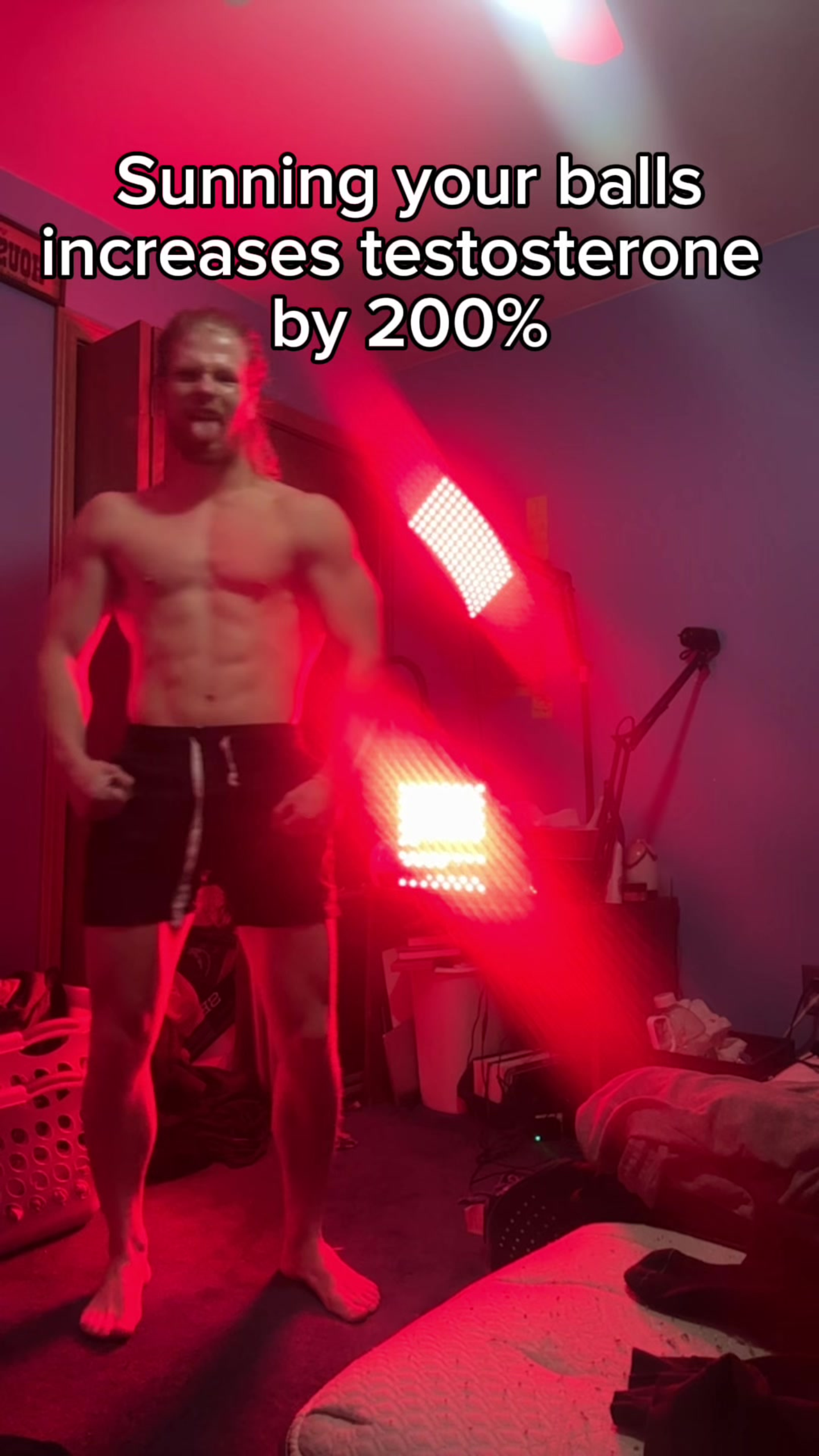
The narrator claims red light therapy (RLT) on the testicles can increase testosterone (T) by 200%. While based on small animal studies and a nearly century-old UV study, current human clinical evidence is insufficient to support this percentage.
The narrator claims red light therapy (RLT) on the testicles can increase testosterone (T) by 200%. While based on small animal studies and a nearly century-old UV study, current human clinical evidence is insufficient to support this percentage.
🔥Hot Take:
- Biohackers are extrapolating 1939 UV data onto modern 660nm LEDs with very little human clinical data to bridge the gap.
- While the '200%' figure is a viral marketing staple, it primarily originates from rats and high-intensity ultraviolet light, not standard consumer red light panels.
🔥Hot Take:
- •Biohackers are extrapolating 1939 UV data onto modern 660nm LEDs with very little human clinical data to bridge the gap.
- •While the '200%' figure is a viral marketing staple, it primarily originates from rats and high-intensity ultraviolet light, not standard consumer red light panels.
Claim Breakdown:
📝 Fact Check: The '200%' figure typically stems from a 1939 study (Myerson et al.) that used ultraviolet (UV) light, not red light, on human genitals. Modern claims cite rat studies (Ahn et al., 2013) where 670nm light increased T-levels in rodents. However, robust human clinical trials have failed to replicate a 200% increase; most human studies show either negligible effects or modest improvements primarily in cases of existing dysfunction rather than healthy optimization.

Fact Check Date: January 11, 2026
IMPORTANT WARNING
Disclaimer: This tool provides general informational content and is not a substitute for personalised, professional advice.
Recent BS Checks